Research

The long run, in numbers

LEAP researchers transcribe archival records at scale and link them across time, to measure how African economies grew and why some stalled. The work runs from the Cape Colony of the seventeenth century to the labour markets of the twentieth.

Current projects

What we are working on

A framed composite portrait from the LEAP exhibition on runaway slaves at the Cape

Project 1834

Slavery, emancipation and the university

LeadKate EkamaPeriodFrom 2026FunderStellenbosch University

Slavery was abolished at the Cape on 1 December 1834. Project 1834 studies what slavery and emancipation meant for the people of Stellenbosch and for the university that grew up among them. It has three pillars: research on slavery and its aftermath, redress through histories of the university’s farms, and public history.

The project launched in January 2026 with the international conference Global Slavery, Emancipations and the University at the Stellenbosch Institute for Advanced Study.

A Cape Dutch farmhouse behind oak trees, photographed in the early twentieth century

The Cape of Good Hope Panel

Two centuries of households, linked

LeadJohan FouriePeriod2021 to 2026FunderRiksbankens Jubileumsfond

The Cape Colony’s annual tax censuses, the opgaafrolle, recorded every settler household’s people, crops, livestock and slaves. The Cape of Good Hope Panel transcribes the full series and links households from one census to the next, which makes it one of the longest household panels for any pre-industrial society.

The project is funded by Riksbankens Jubileumsfond, the Bank of Sweden Tercentenary Foundation. It concludes in 2026 with a public release of the data.

capepanel.org
A nineteenth-century lithographed survey plan of a gold concession

Time Traveller

A thousand years of travellers' accounts as data

LeadEdward Kerby

For a thousand years travellers to Africa wrote down what they saw: prices, crops, diseases, rulers, roads. Time Traveller treats these diaries and accounts as data. It uses text-as-data methods to measure how Africa’s economies and societies changed, in places and periods for which no statistics exist.

timetraveller.voyage
A bound volume of company registration papers in the Cape archives

Frontiers of Finance

A lab for African business and financial history

LeadEdward Kerby

Frontiers of Finance studies how firms, banks and investors built Africa’s financial markets, and where they failed. It works from company registers, share lists and prospectuses, among them the records of the joint-stock companies of the Cape Colony.

A figure standing among aloes above a river valley, photographed in the early twentieth century

Indigenous economies of the Cape

Khoe labour, wages and trade on the frontier

LeadCalumet Links

The Khoe were the Cape’s first pastoralists and, after colonial settlement, a large share of its farm labour. Colonial records counted them poorly. This project grew out of the Cape of Good Hope Panel. It reconstructs Khoe labour, wages and trade on the Cape frontier and asks how indigenous households responded to the settler economy.

Chair in Economics, History and Policy

Economic history for public debate

LeadJohan Fourie

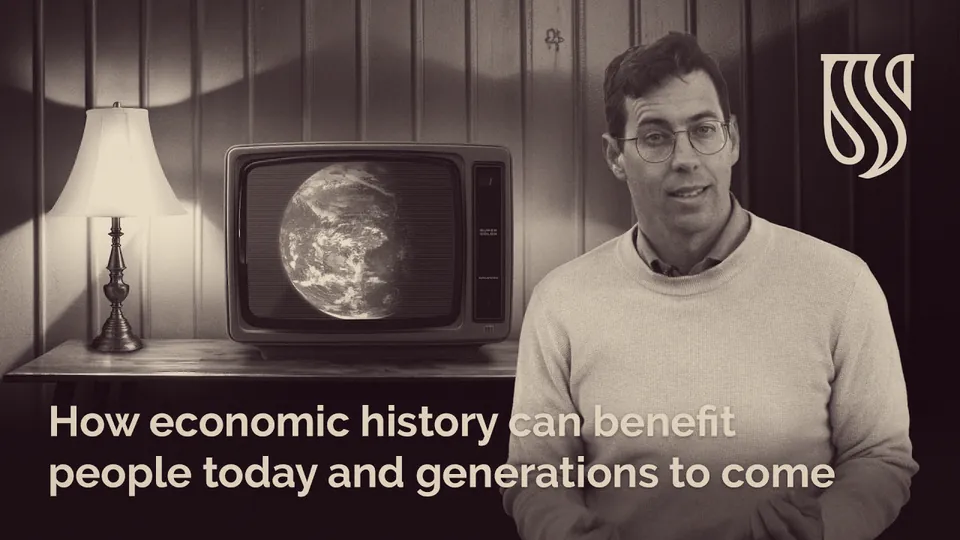
The Chair in Economics, History and Policy deepens research in economic history and carries its insights into public policy and public debate. It starts from the idea that stories and historical narratives shape economic behaviour and policy: as Robert Shiller argues, economic narratives can influence major events such as recessions. Through applied history, the use of historical analogies and lessons, the Chair helps policymakers ground their decisions in historical precedent. This matters most in developing countries, where past policies and economic crises are poorly understood and closer study of history offers real guidance.

Led by Johan Fourie, the Chair works across four themes: publications, pedagogy, policy and public engagement. Through new teaching materials, policy workshops and public outreach, from blogs and podcasts to graphic novels, it connects rigorous historical research with practice and gives decision-makers a long view of today’s problems. Its home for public writing is Our Long Walk, a blog and podcast on the economic history of South Africa and the continent.

ourlongwalk.com

Publications

Published articles

2026

2025

Working papers

LEAP working papers

Published in the Stellenbosch Economic Working Papers series. Team members are in bold.

Library

The Kris Inwood Library

A reference library of economic history, in the LEAP office

In 2019 Kris Inwood, Professor of Economics and History at the University of Guelph in Canada and a member of LEAP’s Governing Board, donated his collection of economic history books to LEAP. The books reached Stellenbosch early in 2020, just before the Covid lockdown.

They now form the Kris Inwood Library, housed in the LEAP office on the fifth floor of the Schumann Building. It is a reference library: the books may be read there, and do not leave the room.

A full catalogue of the library will be published on this page soon.

Donated
2019
Where
LEAP office, fifth floor, Schumann Building
Use
Reference only
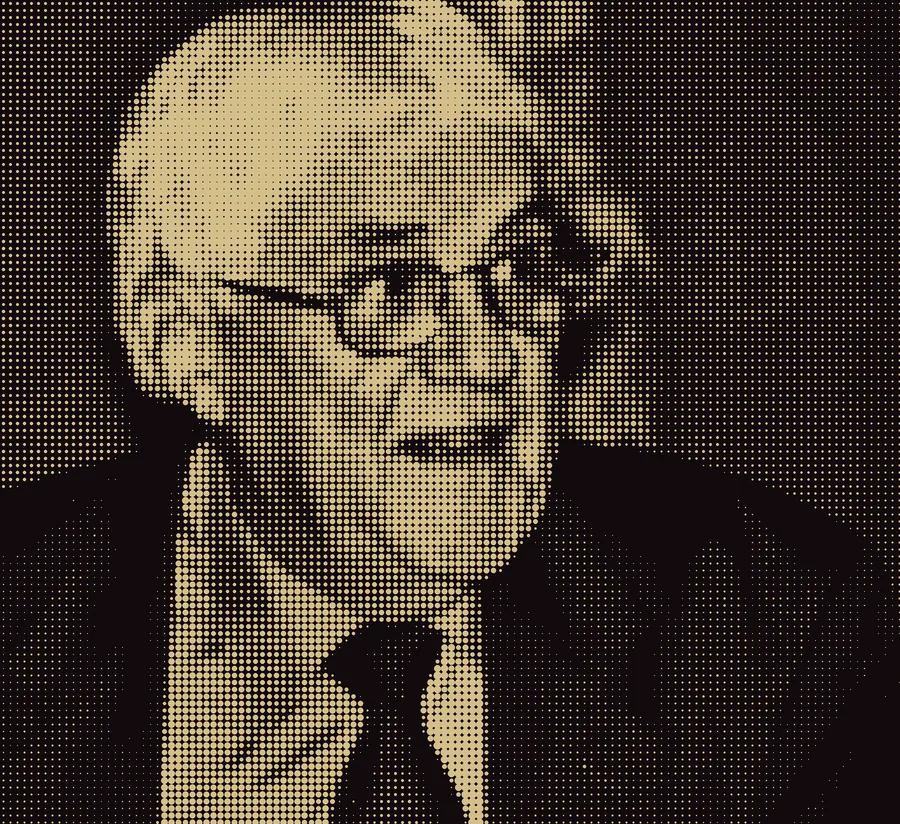
Sampie Terreblanche, printed as a halftone
Sampie Terreblanche1933–2018

Repository

The Sampie Terreblanche Research Repository

The work of a political economist and public intellectual

Sampie Terreblanche was a professor of economics at Stellenbosch University and, for half a century, one of South Africa’s most outspoken public intellectuals. His A History of Inequality in South Africa, 1652–2002 became the standard account of the country’s systemic inequality, and Lost in Transformation (2012) carried the argument into the democratic era.

The Department of Economics keeps a repository of his work: his books and monographs, the reviews they received, and his life and work as remembered by his family and colleagues.

  • A History of Inequality in South Africa, 1652–2002
  • Lost in Transformation
  • Western Empires, Christianity and the Inequalities between the West and the Rest, 1500–2010
  • Verdeelde land