
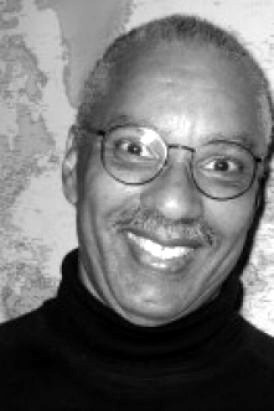
Warren Whatley, emeritus professor of economics at the University of Michigan, delivers the eleventh annual LEAP Lecture in Stellenbosch on 9 November 2026 at 18:00. His title is Domar in Africa. The venue will be announced here.
In 1970 the economist Evsey Domar argued that where land is abundant and labour scarce, landowners who want to live off the work of others must tie workers to them by force. Whatley asks whether this explains the institutions of precolonial Africa. Before the era of the slave trades, he finds, land abundance does predict African slavery. The slave trades then changed the pattern: political centralisation and slavery came to determine each other, and polygyny, often described as an ancient African tradition, spread during the slave-trade era. Land abundance never explains political decentralisation. The lecture draws on his new paper, Domar in Africa: Land Abundance, the Slave Trades, and the Choice of Institutions, a first draft on which he welcomes comments.
Whatley taught at Michigan from 1981 to 2016, in economics and in Afroamerican and African Studies. He is a former president of the National Economic Association and has served on the editorial boards of the Journal of Economic History and Explorations in Economic History. His research covers the economic history of Africa and of African Americans in the United States, and his book Slavery, Freedom, and Development: How Africa Became the Mirror Image of Europe was published by Cambridge University Press. He discussed the book on the Our Long Walk podcast in May.
See all LEAP Lectures since 2016, each with its film.
The lecture closes the day of the LEAP workshop on culture and economic policy.